
Understanding Hot Wheels Cards: International, US-Only, and Short Cards
Published September 2026
A single-car Hot Wheels blister pack - the plastic-and-cardboard "card" a basic 1:64 casting ships on - isn't printed just one way worldwide. Mattel runs three distinct card formats side by side: International, US-Only, and Short (also called a J-card, after its shape). The car inside can be identical across all three. What changes is the packaging around it - and for collectors, that packaging is often exactly what makes a specific card worth tracking down.
Same car, three different cards
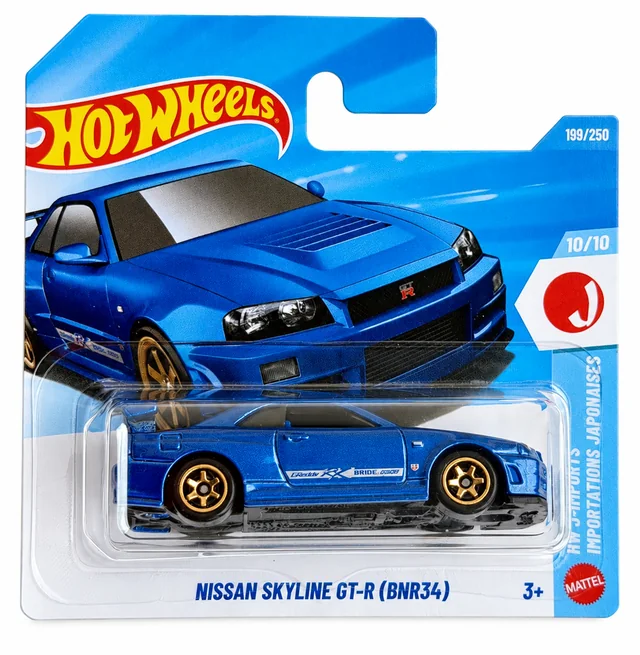
From the front, most collectors can't reliably sort a card into one of these three categories - the artwork, the character banner, and the car itself usually look the same regardless of format. The real tell is on the back of the card, where regional labeling requirements force very different amounts of printed text into the same small panel.
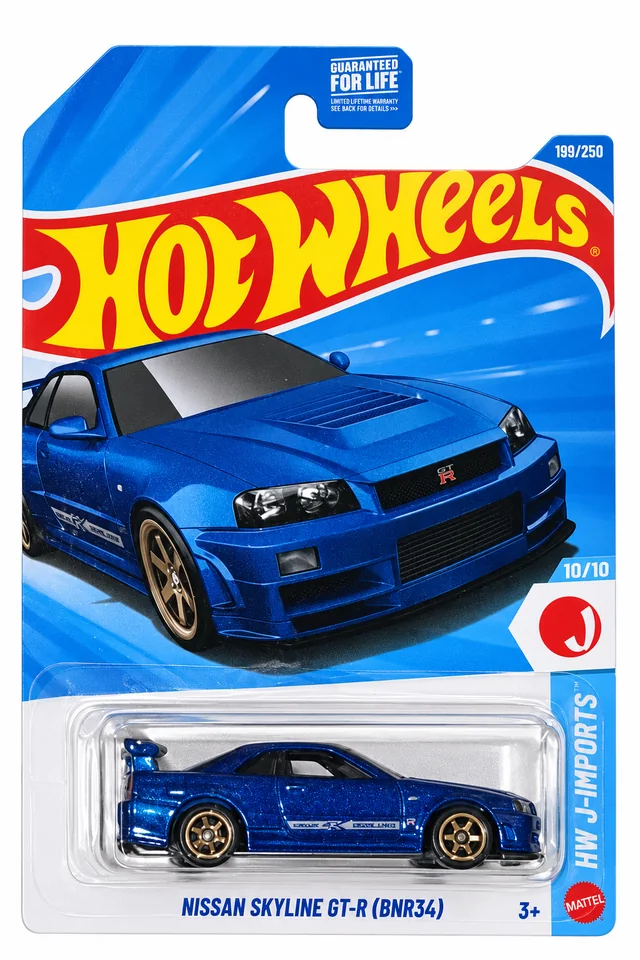
International Cards
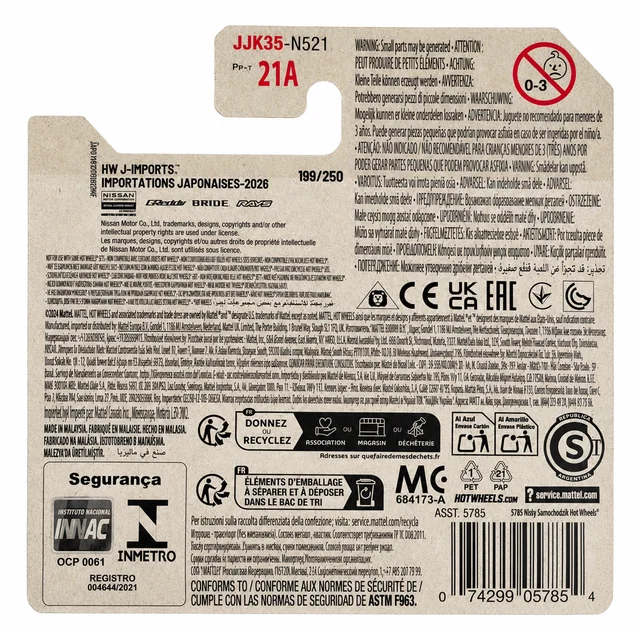
International cards are built to satisfy labeling rules across many countries at once, so the back panel carries safety warnings and manufacturer text repeated in a long list of languages, plus a stack of country-specific certification marks (CE, UK CA, INMETRO, and others) rather than just one or two. On the example below, that shows up as a dense block of repeated warning text running through French, Italian, Dutch, Spanish, Portuguese, and several more languages, alongside a product name printed out in each of them too.
Because International cards cover so many markets from one print run, they're also where certain regional-exclusive castings or colorways tend to surface first (or only) outside the US - part of why some collectors specifically hunt for the international version of a car even when a US release exists.
US-Only Cards
US-Only cards are the opposite: built for a single market, so the back panel only needs one language's worth of warning text and a shorter list of manufacturer addresses. That leaves a noticeably cleaner, sparser back panel - still legally required text, just far less of it.
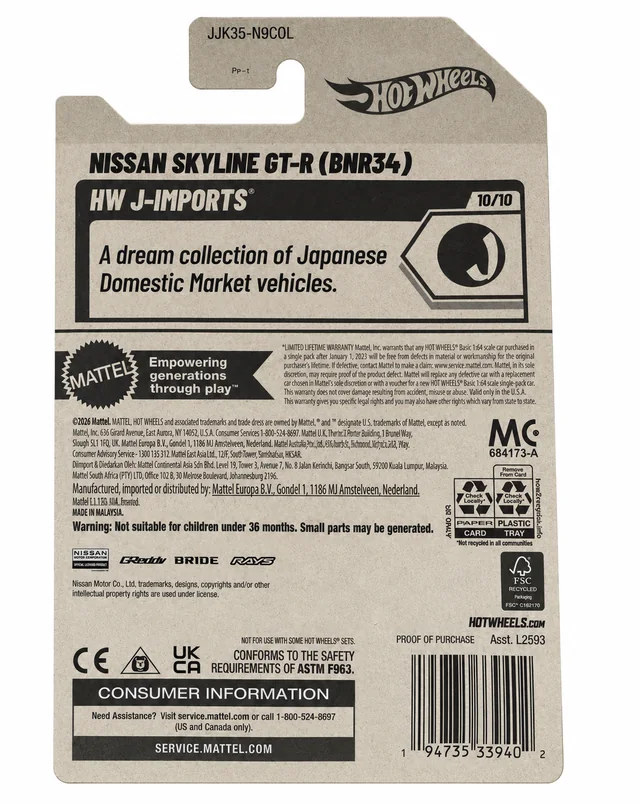
A handful of castings and deco variants only ever get a US-Only release, which is exactly why they end up on collectors' want-lists outside the US - they're not a different mold or a rarer casting mechanically, just a card format that never shipped to their region.
Short Cards
The third format, the Short card (or "J-card"), keeps the same basic front artwork but trims the card's overall length - it's a visibly smaller, more compact package than a standard International or US-Only card, built that way because it takes up less shelf and shipping space. Retailers in some markets favor it for exactly that reason. It isn't a different casting or a different deco; it's the same car on a shorter piece of cardboard, which is why it doesn't need its own worked photo example here the way International and US-Only backs do - the giveaway is simply the card's physical length on the shelf, not anything printed on it.
Why the difference matters to collectors
None of this changes what's inside the blister - the car itself is identical. What it changes is availability and, for some collectors, completeness: a "full set" of a given release can mean chasing the International card, the US-Only card, and the Short card of the same casting separately, since each is technically a distinct release even when the car never differs. For anyone buying online from a seller in another country, checking which format is pictured is also a quick way to gauge which market a listing actually shipped from.
Also see: how to read the case-letter code on a mainline shipping box →